
Binary Code Examples: Letters, Numbers, Emoji, and Phrases
These binary code examples cover letters, digits, punctuation, emoji, and complete phrases. Each group represents one byte. Use the tables for a lookup or compare them with the output of the text converter.
Alphabet in Binary (A-Z)
Uppercase A-M
Uppercase N-Z
Lowercase a-m
Lowercase n-z
Numbers 0-9 in Binary
Common Words in Binary
Symbols and Special Characters
Famous Quotes in Binary
"Hello World"
01001000 01100101 01101100 01101100 01101111 00100000 01010111 01101111 01110010 01101100 01100100
"I love binary"
01001001 00100000 01101100 01101111 01110110 01100101 00100000 01100010 01101001 01101110 01100001 01110010 01111001
How to Read These Examples
Each group of eight bits represents one byte. For the ASCII examples, one byte is one character. Emoji and other non-ASCII text use multiple UTF-8 bytes. Spaces separate displayed byte groups; a space inside the message is itself encoded as 00100000.
Use our binary translator tool to convert your own text to binary instantly and verify these examples.
Check the examples
Technical reference
Related Articles
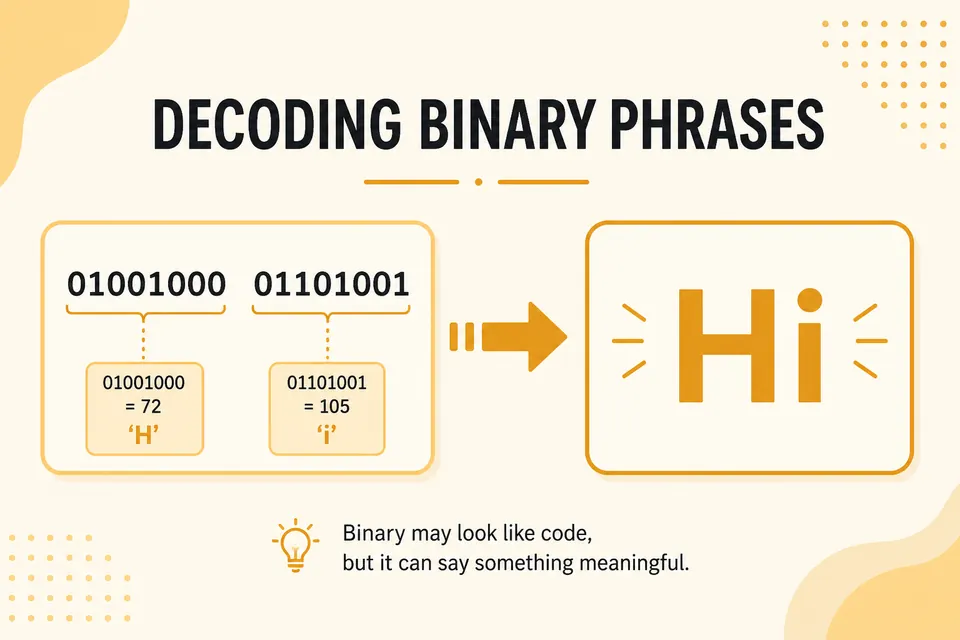
What Does 01001000 01101001 Mean? Common Binary Phrases
Decode popular binary strings like Hi, Hello, and OK. A practical phrase table plus tips for spotting ASCII in the wild.
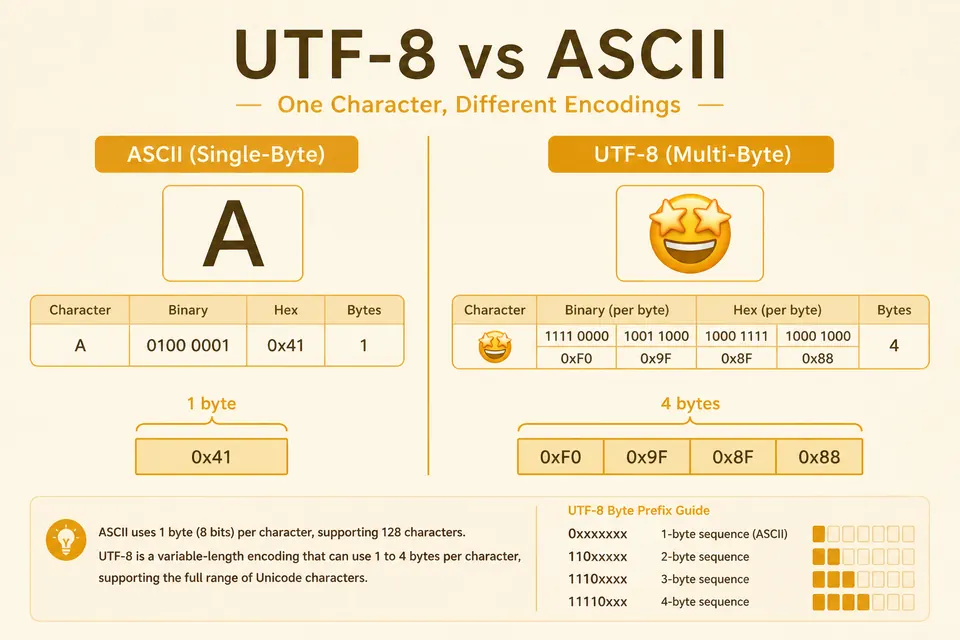
UTF-8 vs ASCII: Byte Counts for Hello, Accents, and Emoji
ASCII fits in one byte. UTF-8 can use one to four. See why emoji and accented text expand the bitstring, with clear examples.

Text to Binary: UTF-8 Examples and ASCII Codes
Learn how to convert text to binary code with examples, ASCII tables, and step-by-step instructions. Includes ASCII letters, words, and UTF-8 byte counts.